


Author: Asheboro Honda Team
For Honda drivers, keeping up with maintenance is more than a chore; it’s an investment in the safety and value of your vehicle. The quality of care your car receives affects how it handles the commute on I-73/74 and whether it lasts for years to come. As a dealership serving the Asheboro community for over 50 years, Asheboro Honda understands the unique demands our local roads place on your vehicle. Choosing a Honda-certified service department means your car is in the hands of experts who use genuine parts and advanced diagnostic tools. This ensures your vehicle runs smoothly, maintains its value, and keeps you safe.
Table of Contents
Key Takeaways (TL; DR)
Here is a quick summary of what to look for when choosing where to service your Honda.
- Protect Your Investment: Using a certified center with genuine Honda parts helps maintain your vehicle’s resale value and warranty, a key factor given how well Hondas hold their value according to sources like Kelley Blue Book.
- Specialized Expertise: Honda-trained technicians have the specific knowledge to service complex systems like the Honda Sensing® suite and hybrid powertrains found in models like the Accord Hybrid and CR-V Hybrid.
- Convenience is Key: Look for service centers that offer amenities like loaner vehicles, shuttle services, and online scheduling to fit your busy life.
- Transparent and Trustworthy: A great service center provides clear estimates, explains repairs without pressure, and keeps detailed digital records of all work performed.
- Advanced Technology: Certified shops use Honda’s proprietary diagnostic tools, like the Modular Vehicle Communication Interface (MVCI), for the most accurate service.
- Guaranteed Quality: Repairs from a certified dealership come with a warranty, giving you peace of mind long after you leave the service bay.
- Local Knowledge Matters: A local dealership understands the impact of North Carolina’s weather and driving conditions, from city traffic in Greensboro to rural routes around Lexington.
What Are the Core Benefits of a Certified Honda Service Center?
Choosing a certified Honda service center offers distinct advantages that protect your vehicle’s health and your wallet. These benefits ensure your Honda receives the highest standard of care.
- Using genuine Honda parts, or OEM (Original Equipment Manufacturer) parts, is crucial: These components are designed specifically for your model, guaranteeing a perfect fit and function while protecting your factory warranty.
- Technicians at certified centers are trained directly by Honda: They have specialized knowledge of everything from your Accord’s engine to your Pilot’s advanced safety features.
- Newer Hondas often come with the Honda Service Pass program: Certified centers can perform the complimentary maintenance covered under this plan, saving you money on essential services.
- Every visit is logged into Honda’s national service database: This creates a complete and accessible service history, which is a major plus for warranty claims and can boost your car’s resale value.
Whether you’re navigating the downtown traffic of Winston-Salem or cruising down US-64, trusting an uncertified shop can be risky. You might get aftermarket parts, an incorrect diagnosis, or even risk voiding your warranty.
Quick Facts for North Carolina Honda Drivers
- The stop-and-go traffic on Wendover Avenue in Greensboro can wear down your brakes and tires faster than you might think. Regular inspections are key to staying safe.
- Keeping up with factory-scheduled maintenance can significantly increase your car’s trade-in value. A complete service history is a powerful selling point.
- The choice of a service center directly impacts your vehicle’s lifespan and your overall cost of ownership. It’s one of the most important decisions you’ll make as a car owner.
Certified vs. Non-Certified: What Is the Real Difference?

When it’s time to service your Honda, the choice between a certified dealership and an independent mechanic goes beyond just a name. It’s a difference in technical skill, equipment, and financial protection.
A certified shop is crucial for maintaining your Honda’s factory specifications. Independent shops, though convenient, often lack specialized training for the latest Honda systems. The choice between a certified dealership and an independent mechanic significantly impacts technical expertise, specialized equipment, and financial protection. An informed decision directly affects your vehicle’s performance, longevity, and resale value. This choice is vital for optimal condition and high-standard repairs, making it essential for every Honda owner to consider all factors.
An authorized Honda dealership is the best option for maintaining factory specifications. Directly affiliated with the manufacturer, these establishments receive the most up-to-date information, training, and tools for modern vehicle complexities. Independent shops, while convenient and sometimes cheaper, often lack the intensive, specific training required for evolving Honda systems. The sophisticated nature of automotive engineering, especially in advanced driver-assistance, hybrid powertrains, and electronic networks, makes manufacturer-specific training at dealerships a critical advantage.
What Does “Honda-Certified” Actually Mean?
A service department authorized by American Honda Motor Co. has to meet high standards. This certification is a promise of quality in several important areas.
- Technicians receive ongoing training from Honda. This covers gasoline engines, advanced hybrid systems like those in the 2025 Civic Hybrid, and all-electric models like the Prologue.
- Only genuine Honda parts are used for repairs. Each of these parts is backed by its own manufacturer warranty, ensuring quality and reliability.
- Certified centers have access to Honda’s specialized diagnostic tools and a direct line to technical service bulletins (TSBs). This means they get the latest repair information straight from the source.
- All service work is documented in a way that maintains your factory warranty and any extended protection plans. This keeps your investment protected.
- Dealerships must maintain high customer satisfaction scores. These scores are monitored by Honda to ensure a consistently positive experience for every owner.
What Key Services Should a Top Honda Service Department Offer?
A premier Honda service department provides a full spectrum of services to care for your vehicle throughout its life. It’s about more than just oil changes; it’s about providing expert care for every part of your Honda.
Here are the essential services you should expect from a leading service center:
- Oil Changes and More: This includes oil changes, tire rotations, brake inspections, and fluid checks. These are all done according to the maintenance schedule recommended by Honda for your specific vehicle.
- Major Mechanical Issues: From complex engine diagnostics to transmission work, a certified center is equipped for any major mechanical issue. They use genuine Honda parts and specialized tools to get the job done right.
- Honda Service Pass: A good service center will honor programs like the Honda Service Pass. This ensures you receive the complimentary maintenance you’re entitled to with a new vehicle purchase.
- Specialized Service: With the rise of models like the CR-V Hybrid and the all-electric Prologue, specialized service is vital. This requires specific training for battery diagnostics, inverter maintenance, and electric motor repairs.
- Complex Electronics: Using tools like Honda’s diagnostic system, technicians can find and fix issues with complex electronics. This includes systems like Honda Sensing® and other advanced driver-assistance systems (ADAS).
- Tire Services: A full suite of tire services is important for safety. This includes mounting, balancing, rotation, and alignment, which helps your tires last longer.
- Comprehensive Brake Services: Comprehensive brake services are essential for your safety on roads like Business 85 through High Point. This includes inspections, pad and rotor replacement, and brake fluid flushes.
- Battery Testing: A certified center should offer testing, replacement, and recycling for both standard 12V and hybrid/EV batteries. This ensures your vehicle always starts and runs efficiently.
- Heating and Air Conditioning: Proper function of your heating and air conditioning is crucial for comfort, especially during hot North Carolina summers. Diagnosis and repair of these systems keep you comfortable year-round.
- Recalls and TSBs: Certified centers automatically check for and address open recalls. They also handle Technical Service Bulletins (TSBs) to keep your vehicle updated with the latest manufacturer improvements.
For quick maintenance needs like an oil change or tire rotation, an express service option saves you time. This gets you back on the road without a long wait.
Does a Dealership’s Technology Give It an Advantage?
Yes, absolutely. Modern cars are rolling computers, and a Honda service department’s technology is a major advantage. The best centers invest in diagnostic tools and software made specifically for Honda vehicles.
This technological edge results in more accurate diagnoses and efficient repairs. It ensures that complex systems, like ADAS and hybrid powertrains, are serviced correctly every time. Certified Honda dealerships use the Modular Vehicle Communication Interface (MVCI). This is the factory-standard diagnostic system that allows for deep-level diagnostics, software updates, and precise calibrations of features like Honda Sensing®.
Independent shops often use generic OBD-II scanners. These tools are limited to basic engine codes and can’t properly diagnose or recalibrate many of Honda’s specialized systems. Service departments with advanced tech integrate your digital service records with Honda’s national database. This creates a full history for warranty claims and enhances resale value, as confirmed by experts at Edmunds. Modern dealerships improve the customer experience with online scheduling and real-time service updates via text. They may also provide digital multi-point inspection reports for full transparency.
This commitment to technology means your Honda gets the most precise care available. It provides peace of mind for you as the owner.
Comparison: Certified Honda Service vs. Independent Repair Shops
| Service Criteria | Certified Honda Dealership | Independent Mechanic |
|---|---|---|
| Technician Training | Factory-certified & hybrid-trained | General automotive experience |
| Parts Used | Genuine Honda OEM only | Aftermarket or used parts |
| Warranty Protection | Fully compliant with Honda plans | Risk of warranty void if wrong parts are used |
| Technology Access | Honda diagnostic suite (MVCI) | Limited to generic OBD scanners |
| Recall/TSB Updates | Integrated with national Honda systems | Usually unavailable |
Your Honda’s long-term health depends on precision care. For drivers in the Piedmont Triad who deal with both city congestion and rural highways, this is especially true.
Only certified centers have the right tools and training. They can properly service newer systems like the Honda Sensing® suite, hybrid-electric drivetrains, and advanced ADAS features.
Why Does Driving in Central North Carolina Require Special Attention?

The driving conditions around Asheboro, Greensboro, and Winston-Salem present a unique mix of challenges for any vehicle. From the humidity in the summer to the occasional winter ice, your Honda’s systems are constantly working hard.
- The stop-and-go traffic on I-40 or US-220 during commute hours puts extra stress on your brakes, transmission, and engine cooling system. Regular fluid checks and brake inspections are essential to prevent premature wear.
- North Carolina summers are hot and humid, which can strain your car’s battery and A/C system. A certified technician can test your battery’s health and ensure your A/C is ready to handle the heat.
- Our region gets a fair amount of rain, and our rural roads can be hilly and winding. Proper tire tread depth and wheel alignment are critical for maintaining traction and safe handling in wet conditions.
- The mix of pollen in the spring and falling leaves in autumn can clog your engine and cabin air filters. Replacing these filters regularly ensures clean air for both your engine and your passengers.
How Can You Get the Most Out of Your Service Appointment?
Being prepared for your service visit can make the process smoother and more effective. A little planning helps ensure you and your service advisor are on the same page.
- Before you arrive, make a list of any specific issues you’ve noticed. This could be a strange noise, a warning light, or a change in performance. The more details you can provide, the easier it is for the technician to diagnose the problem.
- Remove any personal items or clutter from your vehicle. This gives the technicians clear access to all areas of your car and prevents anything from getting misplaced during service.
- If your Honda has a locking lug nut on the wheels, be sure to have the key available. This is necessary for services like tire rotations or brake inspections.
- Don’t be afraid to ask your service advisor questions. Understanding the recommended services and why they are needed helps you make informed decisions about your vehicle’s care.
What Are the Signs of a Trustworthy Honda Service Department?
Not all service departments provide the same level of quality. Finding a Honda service center with a strong reputation can save you from future headaches and expensive mistakes.
There are clear signs that distinguish a high-integrity dealership from the others. These signs show a commitment to both quality work and customer satisfaction.
How Do You Know If a Service Center Is Reputable?
Here are the key indicators to look for when evaluating a Honda service department:
- Consistently high ratings: Look for these on sites like Google and DealerRater, paying attention to reviews that mention honesty, good communication, and quality repairs.
- Certified technicians: Ask if their team includes Honda Master Certified or Hybrid Certified technicians, as this confirms they have the highest level of factory training.
- Clear, upfront estimate: You should receive one that breaks down the costs of parts and labor, as a trustworthy shop will not have hidden fees or surprise charges.
- Service history logged: A good service center will log your service history in Honda’s national database, which is vital for warranty claims and proves a history of proper maintenance when you decide to sell.
- Valued time amenities: Amenities like loaner vehicles, shuttle service, and online scheduling show that a shop values your time, and text message updates on your service status are another sign of a well-organized, customer-focused operation.
What Honda Drivers Say Matters Most
Drivers in our local communities value clear communication and trust. With busy schedules filled with work, family, and long commutes, transparency is essential.
Here’s what typically builds lasting loyalty with Honda owners:
- Real-time updates on service progress via text message.
- Service hours that include evenings or Saturdays.
- Service advisors who take the time to explain repairs instead of just selling them.
- Technicians who are willing to show you old parts and explain diagnostic results.
What Service Red Flags Should You Avoid?
On the other hand, here are some warning signs that suggest you should look for service elsewhere:
- Vague estimates with lump-sum charges and no breakdown of costs.
- No visible certifications or details about technician training.
- High-pressure tactics to sell you services that aren’t based on a clear diagnostic result.
- A lack of proper documentation for the services that were completed.
A Honda dealership that cares about building a long-term relationship will always focus on education and integrity. If you feel like you are being sold to instead of served, it’s a good idea to find another service center.
What Questions Should I Ask a Honda Service Manager?
Asking a few key questions can help you determine if a service center meets Honda’s high standards. A good service manager will be happy to provide clear answers.
Are Your Technicians Honda-Certified?
Honda Master Technicians have undergone extensive training. Confirming their certification ensures the team working on your car understands its specific needs, which is especially important for newer models or hybrids.
Do You Use Genuine Honda Parts?
OEM parts are essential for maintaining your warranty and ensuring reliability. A reputable service center like the one at Asheboro Honda will always use genuine parts unless you approve an alternative.
What Diagnostic Tools Do You Use?
Certified Honda service centers use the Honda-specific MVCI diagnostic system. This is far more advanced than the generic scanners used at many independent shops.
Do You Offer Written Estimates Before Performing Work?
To avoid surprise charges, always ask for an itemized quote. A quality service department will provide a clear estimate for all parts, labor, and fees before starting any work.
How Long Will Service Take, and Do You Offer Loaners or a Shuttle?
For many drivers in the Greensboro and High Point areas, flexible scheduling is important. Ask about express maintenance lanes, loaner cars, or a local shuttle service to make your visit more convenient.
Will My Service History Be Stored and Accessible?
Your vehicle’s maintenance data should be recorded in Honda’s central system. This is important for warranty claims and proves a consistent record of care, which can increase its resale value.
What Warranties Do You Offer on Repairs?
A trustworthy service center stands by its work. Ask about warranties on both labor and parts. Honda dealerships typically offer a minimum of 12-month/12,000-mile coverage on repairs.
Taking a moment to ask these questions ensures your Honda receives care that aligns with factory standards.
Quick Checklist Before You Commit
Before you schedule your next Honda service, use this checklist to confirm the dealership’s quality and transparency. A few smart questions can prevent major issues down the road.
Pre-Service Checklist for Honda Owners:
- Ask if technicians are Honda Master Certified or Hybrid Certified.
- Confirm that all parts used are genuine Honda components.
- Request a written estimate before any work begins.
- Verify they use Honda’s MVCI diagnostic tools.
- Check if they log service records to Honda’s national database.
- Ask about loaner cars or shuttle options.
- Read recent customer reviews that mention trust and communication.
- Inquire about warranty coverage for both labor and parts.
A dealership that meets these standards will answer your questions with confidence. This is about more than just a single service visit; it’s about finding a long-term partner who values your safety and your trust.
Frequently Asked Questions (FAQs)
How often should I get my oil changed?
Most modern Honda vehicles recommend an oil change every 7,500 to 10,000 miles, but your car’s Maintenance Minder system will tell you exactly when it’s time. This can vary based on your driving habits, especially with the local city and highway driving mix.
Can I use aftermarket parts for my Honda repairs?
While some aftermarket parts may be cheaper, genuine Honda OEM parts are always recommended. They are designed for your vehicle, ensuring a proper fit and performance while keeping your warranty intact. Using non-OEM parts could lead to future problems.
When should I replace my brakes?
You should have your brakes inspected at least once a year. If you notice any squeaking, grinding, or a soft brake pedal, it’s time for a check-up. The stop-and-go traffic around High Point and Greensboro can lead to faster brake wear.
Does Honda offer free maintenance?
Yes, many new 2023 and newer Honda vehicles come with the Honda Service Pass. This program covers certain factory-scheduled maintenance, like oil changes and tire rotations, for the first 2 years or 24,000 miles, whichever comes first.
Why is my check engine light on?
The check engine light can signal anything from a loose gas cap to a more serious engine issue. The only way to know for sure is to have it diagnosed at a certified service center with the proper equipment.
Can I get my Honda serviced by any mechanic?
You can, but choosing a Honda-certified service center is highly recommended. Certified technicians have the factory training, genuine parts, and proprietary diagnostic tools needed to maintain your vehicle to the manufacturer’s standards and protect your warranty.
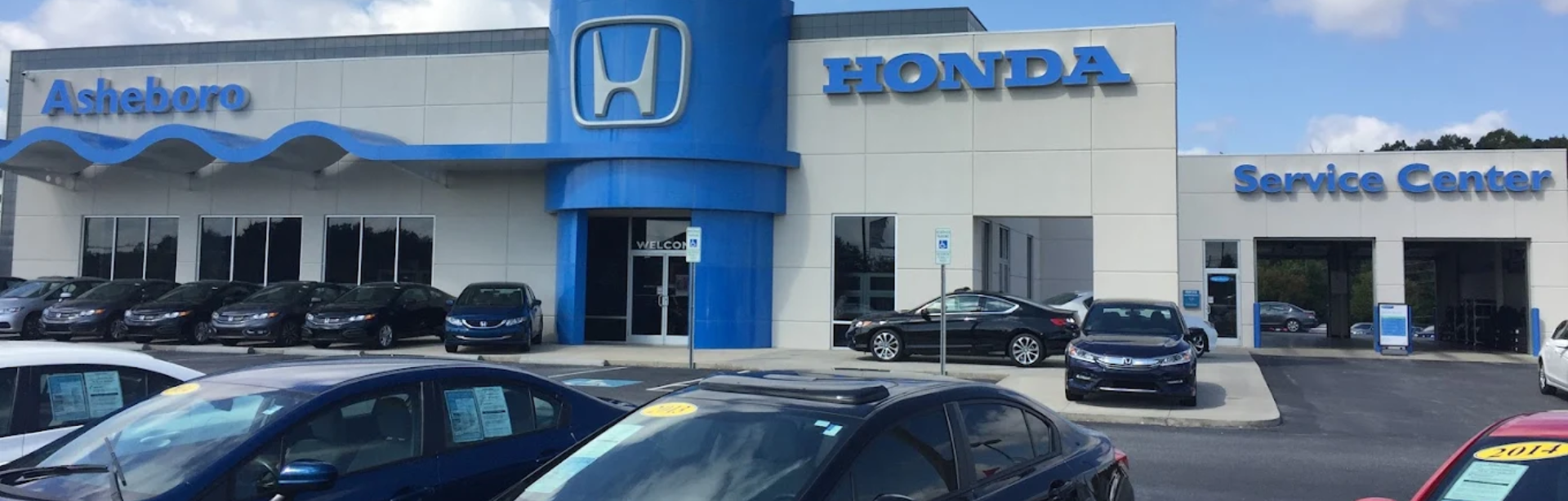
About Asheboro Honda
Asheboro Honda, a family and veteran-owned dealership serving the community since 1996, is proud to be the #1 new car volume dealer in Randolph County and southern Greensboro. Recognized for excellence, Asheboro Honda has earned prestigious accolades like the Honda Presidents Circle and the Better Business Bureau’s Torch Award for Ethics. Beyond sales, we are deeply committed to our community, supporting initiatives like the United Way car giveaway and the Santa Sleigh project, which brings joy to children in need every holiday season.
Related Article: The Ultimate Guide to Finding Your Perfect Honda Dealer in Asheboro, NC
Connect with us


- July 2026
- June 2026
- May 2026
- April 2026
- March 2026
- February 2026
- January 2026
- December 2025
- November 2025
- October 2025
- September 2025
- August 2025
- July 2025
- June 2025
- May 2025
- April 2025
- March 2025
- February 2025
- January 2025
- November 2024
- October 2024
- September 2024
- August 2024
- July 2024
- June 2024
- May 2024
- April 2024
- February 2024
- January 2024
- December 2023
- October 2023
- July 2023
- June 2023
- May 2023
- April 2023
- March 2023
- November 2022
- September 2022
- August 2022
- July 2022
- June 2022
- May 2022
- April 2022
- March 2022
- February 2022
- January 2022
- December 2021
- November 2021
- October 2021
- September 2021
- August 2021
- July 2021
- June 2021
- May 2021
- April 2021
- March 2021
- February 2021
- January 2021
- December 2020
- November 2020
- October 2020
- September 2020
- August 2020
- March 2020
- February 2020
- January 2020
- December 2019
- November 2019
- October 2019
- September 2019
- August 2019
- July 2019
- June 2019
- May 2019
- April 2019
- March 2019
- February 2019
- December 2018
- November 2018
- October 2018
- September 2018
- August 2018
- June 2018
- May 2018
- April 2018
- March 2018
- February 2018
- December 2017
- November 2017
- October 2017
- August 2017
- July 2017
- June 2017
- May 2017
- April 2017
- March 2017
- February 2017
- January 2017
- December 2016
- November 2016
- October 2016
- September 2016
- August 2016
- July 2016
- June 2016
- May 2016
- April 2016
- March 2016